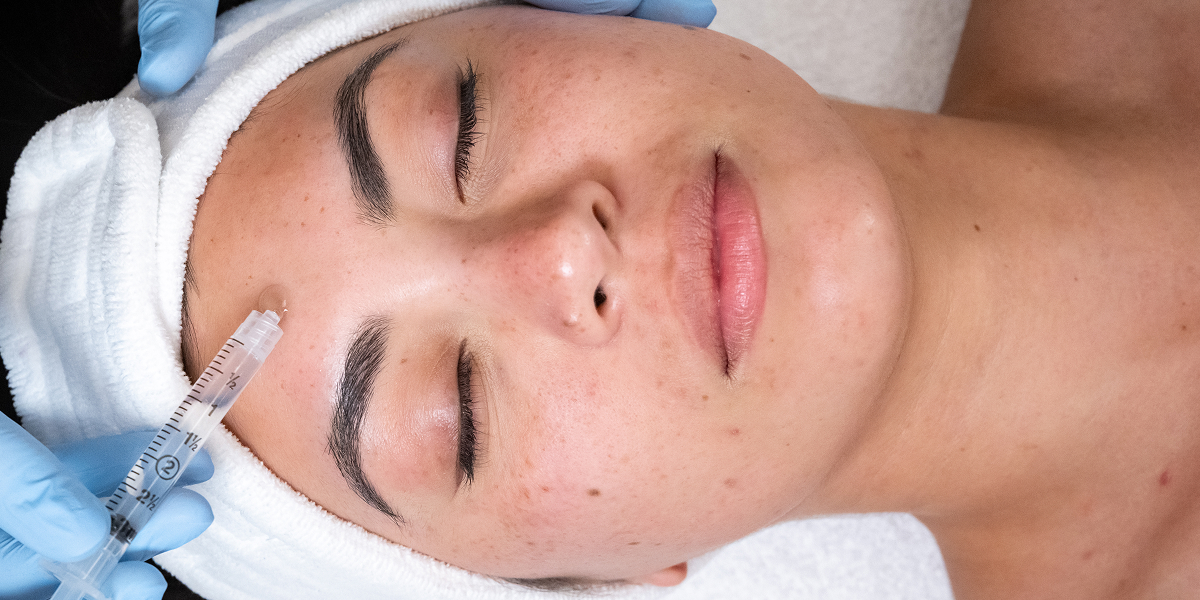
PDRN, exosomes and growth factors are everywhere in skincare right now, and they all promise the same thing—glowing refreshed, healthier skin. While these ingredients share a common goal, they work through different biological pathways and suit different skin concerns. PDRN repairs the skin barrier, exosomes transmit the healing signal and growth factors stimulate collagen. Understanding what this actually means for your skin can help you decide which regenerative ingredient deserves a spot in your treatment routine.
What Is PDRN in Skincare?
PDRN — polydeoxyribonucleotide — is a DNA-derived ingredient extracted from salmon DNA. It's been used in clinical medicine for decades, and now it's making waves in topical skincare as a powerful tool for barrier repair and skin recovery.
Here's how PDRN works in skin:
- Derived from salmon DNA: PDRN supplies the skin with nucleotide building blocks to support cellular repair and regeneration at a foundational level.
- Activates A2A receptors on skin cells: This triggers collagen production and reduces inflammation, helping skin rebuild and strengthen.
- Promotes angiogenesis: PDRN encourages the formation of new blood vessels to improve circulation and tissue repair in compromised skin.
- Strengthens the skin barrier and boosts resilience: It's particularly effective in compromised or reactive skin that needs foundational support.
Research found that PDRN activates adenosine A2A receptors, promoting collagen synthesis, angiogenesis and anti-inflammatory activity. A 2026 split-face study published in PLOS ONE found that topical PDRN achieved approximately twice the improvements in wrinkles, dermal thickness and density compared to 0.1% retinol over 28 days.
PDRN is often used for barrier repair, calming inflammation, sensitive or reactive skin and post-procedure recovery. It's the perfect ingredient for skin that needs rebuilding, rather than just regeneration.
What Are Exosomes?
Exosomes are tiny extracellular vesicles that act as cellular messengers. They transport proteins, lipids and genetic material between cells, influencing cell behavior, tissue repair and immune responses. Think of them as the skin's internal communication network, delivering concentrated instructions that tell your cells what to do.
Here's how exosomes work in skin:
- Act as the skin's cellular messaging system: They deliver concentrated signals to fibroblasts, keratinocytes and other skin cells to trigger repair and regeneration.
- Contain growth factors, proteins and nucleic acids: These bioactive molecules instruct cells to repair damage, regenerate tissue and produce more collagen.
- Work by triggering the body's natural healing response: Rather than adding a substance directly, exosomes prompt your cells to take action on their own.
- Support the reduction of inflammation and acceleration of recovery: They help calm reactive skin while speeding up the healing process after treatments or environmental stressors.
A 2022 clinical study found that topical exosomes showed significant improvements in skin health at six weeks — including reductions in redness, wrinkles and melanin production. A 2025 systematic review of MSC-derived exosomes reported improved elasticity by roughly 11%, reduced wrinkles and lower melanin index in human clinical studies.
What does this mean for your skin? Exosomes may help with redness, fine lines, firmness, texture smoothing and melanin production while accelerating skin recovery. They're ideal for anyone looking for broad, advanced-level regenerative support.
What Are Growth Factors?
Growth factors are proteins that act as biological messengers, signaling skin cells— particularly fibroblasts—to produce more collagen, elastin and other structural proteins. They have one of the more established evidence bases in topical skincare compared with newer regenerative ingredients, like exosomes and PDRN.
Here's how growth factors work in skin:
- Signal fibroblasts to ramp up production: Fibroblasts are the skin's collagen-producing cells, and growth factors tell them to generate more collagen, elastin and glycosaminoglycans.
- Work by initiating cellular communication: They drive replication, repair and tissue regeneration through direct instruction.
- Help reconstruct and reinforce the extracellular matrix: The ECM is the underlying scaffolding that supports skin firmness and elasticity, and growth factors help keep it strong.
- Derived from human, plant or bioengineered sources: Human fibroblast-derived growth factors show particularly strong clinical results.
A systematic review of 33 studies involving 1,180 participants found meaningful improvements in skin texture, fine lines and overall facial appearance with a consistently low adverse event profile. A separate systematic review of 13 studies found improvements in skin elasticity, texture and general facial appearance with minimal side effects.
Growth factors are best for signs of aging, loss of elasticity, fine lines, coarse wrinkles and overall structural quality of skin. They work increasingly well in combination with other regenerative ingredients.
How Exosomes, PDRN and Growth Factors Compare
All three ingredients work toward the same goal—skin regeneration—but through different mechanisms. Here's how they stack up:
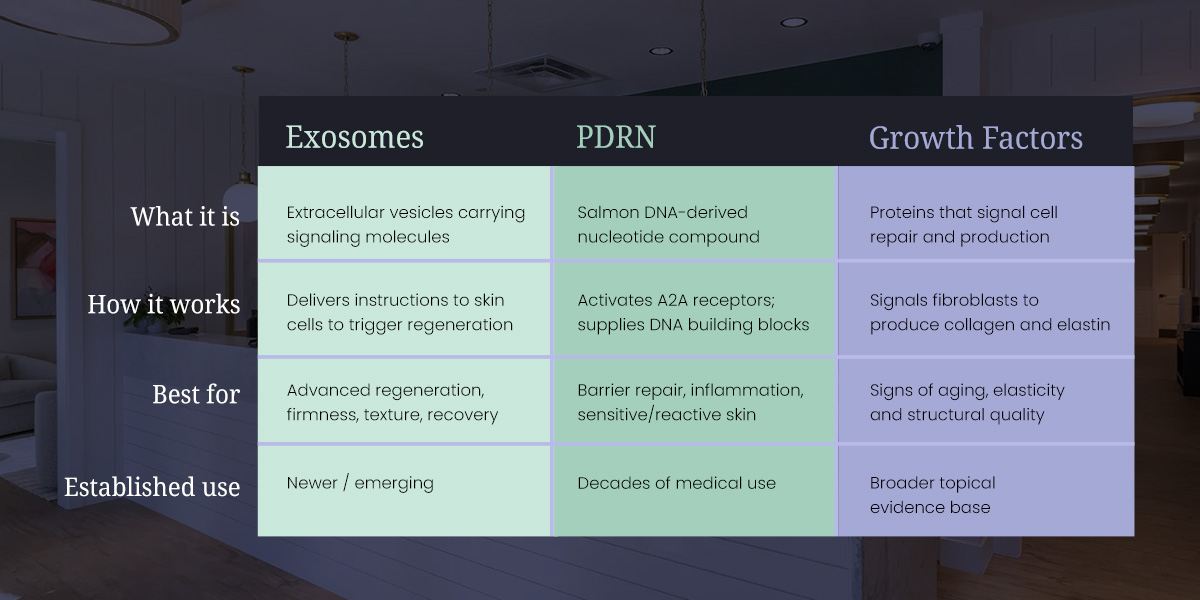
The key takeaway is that PDRN works through A2A receptor activation, exosomes work through cell-signaling delivery, and growth factors work through direct fibroblast stimulation—three genuinely different biological pathways. While exosomes send broad cellular signals, growth factors work more precisely to restore the skin's structural foundation.
Which Regenerative Ingredient Is Right for Your Skin?
The regenerative ingredient you need depends on your individual skin goals, and that's exactly why expert guidance matters. If hydration, barrier support and skin recovery are your priorities, PDRN may be worth exploring. If you're focused on firmness, fine lines and structural support, growth factors are supported by more extensive topical research. If you're looking for broad-spectrum regeneration and skin recovery support, exosomes are the emerging frontier.
That said, results may vary based on your skin type, concerns and how these ingredients are delivered. The best way to know which ingredient is right for you is to talk to an expert who can assess your skin in person and recommend a treatment plan tailored to your needs. At SkinSpirit, our providers specialize in exosome, growth factor and PDRN treatments—including microneedling + catalyst serum treatments— and they'll help you find the right match.
Start Your Skin Journey at SkinSpirit

Exosomes, PDRN and growth factors each offer distinct regenerative benefits. At SkinSpirit, you don't have to figure out which regenerative ingredient is right for your skin on your own. Our expert providers assess your skin in person and recommend the ideal catalyst serum —whether PDRN Salmon DNA, exosomes or growth factors—and professional treatments to target your unique skin goals.
Every treatment plan is customized to your needs, delivered by providers who specialize in natural-looking results. With over 60 clinics nationwide and free consultations, getting the guidance you need is easy. Explore our services, or book an appointment today.
Frequently Asked Questions
1. What is PDRN and what does it do for skin?
PDRN (polydeoxyribonucleotide) is a DNA-derived ingredient extracted from salmon DNA. It works by activating A2A receptors on skin cells to trigger collagen production and reduce inflammation, while promoting new blood vessel formation to improve circulation. PDRN strengthens the skin barrier and is particularly effective for barrier repair, calming inflammation, sensitive or reactive skin, and post-procedure recovery.
2. What are exosomes and how do they work in skincare?
Exosomes are tiny extracellular vesicles that act as cellular messengers, delivering proteins, lipids, and genetic material between cells. They work by delivering concentrated signals to skin cells to trigger repair and regeneration, supporting the reduction of inflammation and accelerating recovery. Research shows exosomes may help with redness, fine lines, firmness, and texture while speeding up skin recovery after treatments.
3. How do growth factors work for skin aging?
Growth factors are proteins that signal fibroblasts—the skin's collagen-producing cells—to generate more collagen, elastin, and structural proteins. They help reconstruct and reinforce the extracellular matrix, which supports skin firmness and elasticity. Growth factors are best for signs of aging, loss of elasticity, fine lines, and overall structural quality of skin, with an established evidence base in topical skincare.
4. Which regenerative ingredient is right for my skin?
The best regenerative ingredient depends on your individual skin goals. PDRN is ideal for barrier repair and calming inflammation, growth factors work well for firmness and structural support, and exosomes offer broad-spectrum regeneration and recovery support. At SkinSpirit, expert providers assess your skin in person and recommend the ideal catalyst serum—PDRN Salmon DNA, exosomes, or growth factors—tailored to your unique needs during a free consultation.
Related Posts