The Complete Guide to Skin Health and Texture
If you've ever felt overwhelmed by skincare advice, you're not alone. An incredible 80% of consumers find the skincare landscape confusing and filled with contradictory advice. Between social media's glass-skin trends and expensive serums promising miraculous transformations of skin health and texture, it's no wonder so many of us feel lost.
So, how do you distinguish between what's beautifully yours to embrace versus what can genuinely be enhanced? Consider this your roadmap to making informed, strategic decisions about your skin's future.
Perfect Doesn't Exist, But Healthy Does
Healthy skin isn't about achieving an impossible, filter-perfect surface — it's about understanding what Mother Nature gifted you with and knowing how to enhance it.
Genetic Texture
Your genetics influence your pore size, oil production patterns and skin architecture. Essentially, the skin's unique blueprint is written with your DNA. You might have naturally fine pores or more prominent ones, oily or dry tendencies. These characteristics are part of what makes your skin distinctly yours. They are not flaws to fix but features to understand and work with strategically.
Acquired Texture
These are the textural changes that accumulate over time through life, environment and circumstance. Changes may include acne scarring that creates structural indentations, sun damage that breaks down collagen fibers, dehydration lines from barrier compromise or environmental wear from pollution and stress. Unlike genetic traits, these texture changes represent genuine opportunities for improvement and correction.
The distinction between your skin's genetic and acquired texture matters because it can shape your entire approach. When you improve skin texture thoughtfully — respecting what's naturally yours while addressing what time and environment have added — you're enhancing your inherent beauty rather than fighting it. This philosophy transforms skincare from a battle into a partnership with your skin's natural potential.
Diagnosing Your Texture Type
Meaningful skin improvement starts with knowing what you're dealing with. That general sense of rough skin texture could actually be one of a few different conditions:
- Surface roughness and dryness: This condition manifests as that subtle sandpaper feeling when you glide your fingers across your skin. This texture results from accumulated dead cells and compromised barrier function. Essentially, your skin's protective layer needs to be restored and renewed.
- Enlarged pores and congestion: Visible texture is created by trapped sebum and debris within follicles. While the size of your pores is largely genetic, proper maintenance and treatment can minimize their appearance.
- Etched lines and crepiness: Fine, delicate texture changes appear particularly around the eyes and on the cheeks. This is your skin's collagen network adapting to time and expression — a natural transition that can be supported and optimized.
- Acne scarring: These are structural changes in your skin's architecture. Depressions and irregularities create shadow and dimension. Research indicates that approximately 47% of acne patients develop some degree of scarring, highlighting this as a medical consideration rather than a cosmetic concern.
- Hyperpigmentation and sun damage: Uneven pigmentation creates visual texture through color variation and light reflection patterns across the skin's surface. Sun damage compounds this effect by creating rough patches where melanin has clustered irregularly. These areas often feel slightly raised or have a different texture quality compared to the surrounding skin.
- Inflammation: Active or chronic skin inflammation can feel tender and appear swollen. An inflammatory response can create temporary texture changes that feel bumpy, tight or unusually sensitive to touch. The skin's healing response often leaves behind textural irregularities even after the initial inflammation subsides.
Types of Interventions for Smoother Skin
The most effective approach to skin texture treatments follows a graduated system. Just as you wouldn't use the same tools to polish silver and restore marble, different texture concerns call for appropriately matched interventions.
Most topical products work exclusively on the epidermis — your skin's outermost layer — while significant texture issues often originate in the dermis, the structural foundation beneath. This distinction determines which professional texture solutions will actually deliver meaningful results.
Surface Polishing and Maintenance
Start here for surface irregularities, dullness and minor congestion:
- Dermaplaning immediately refines texture by removing vellus hair and accumulated dead skin cells. This treatment enhances light reflection for an instantly smoother and more radiant appearance.
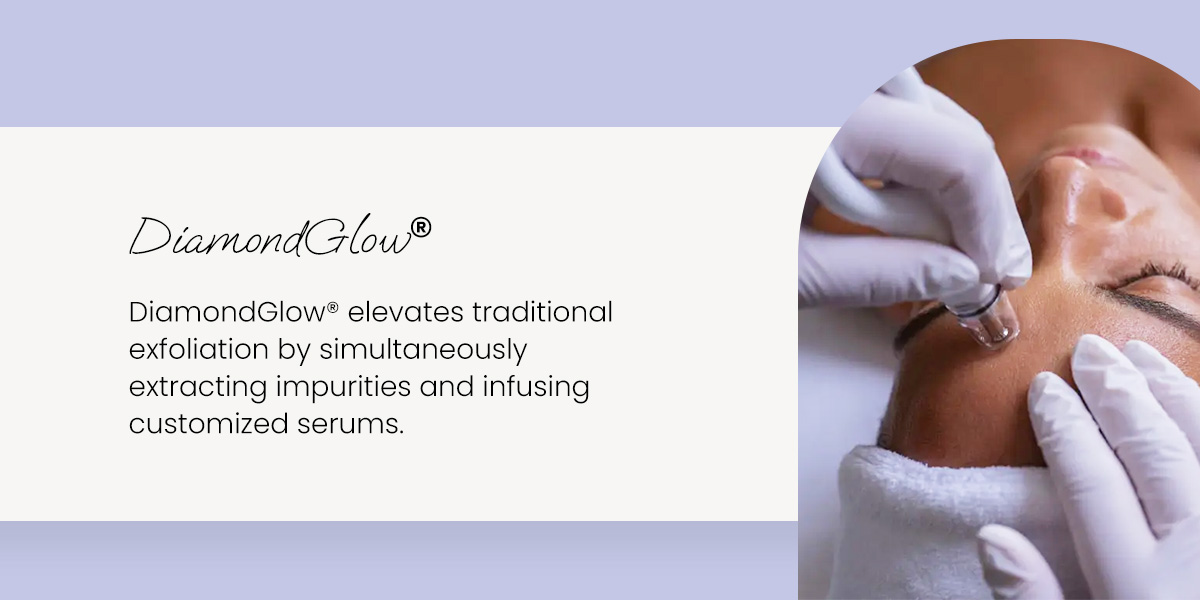
- DiamondGlow® elevates traditional exfoliation by simultaneously extracting impurities and infusing customized serums. This dual-action approach ensures your skin receives purification and nourishment in a single, efficient treatment.
- Texture-improving chemical peels work at the molecular level, dissolving the bonds between dead skin cells to reveal the fresh, smooth texture beneath. Different acids like salicylic, glycolic and trichloroacetic acid (TCA) target specific concerns with precision and predictable results.
Collagen Induction for Pores and Fine Lines
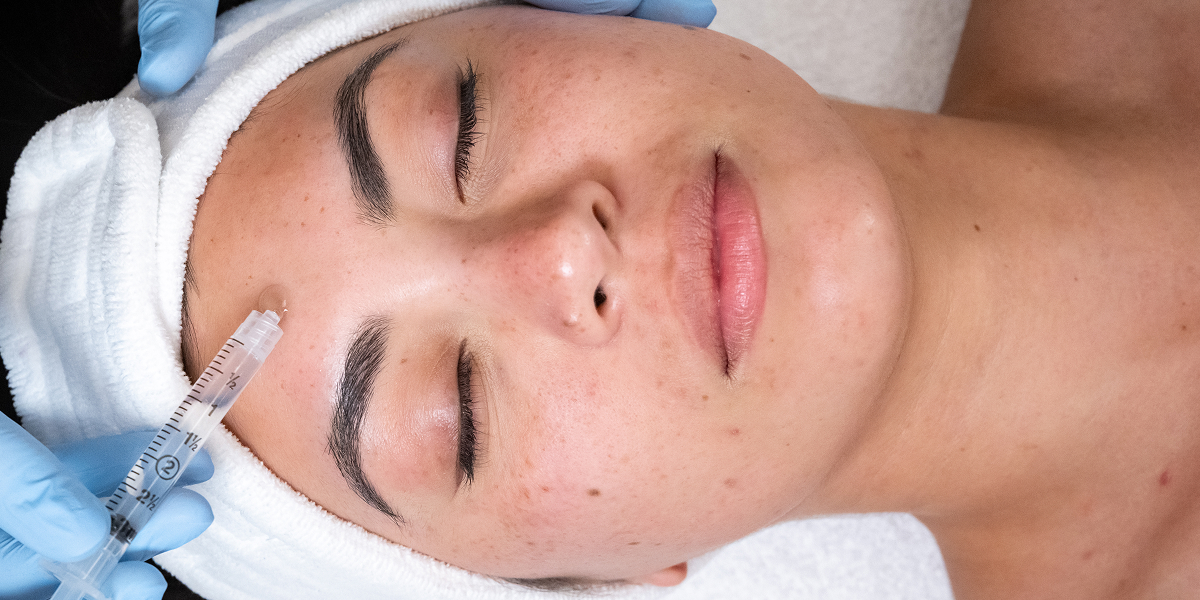
This level of intervention can address visible pores, developing fine lines and early textural changes. Microneedling treats scars and other damage by harnessing your skin's natural healing response through controlled micro-injuries. This process stimulates the production of new collagen, creating a tighter, more refined skin matrix that naturally minimizes pore appearance and smooths surface irregularities.
Microneedling sends concentrated signals to skin cells, accelerating its healing process, whether treating enlarged pores, wrinkles, acne or sun damage.
Structural Remodeling for Scarring and Damage
If you have acne scarring, significant sun damage and pronounced textural irregularities, acne scar treatment and comprehensive structural correction can deliver genuinely transformative results.
HALO lasers completely revitalize the skin through hybrid fractional laser treatment technology. Advanced laser skin resurfacing addresses superficial and deep structural concerns simultaneously, delivering dramatic improvement in overall skin quality.
Protecting Your Investment
Beautiful results deserve protection. Sustaining your improved texture requires following a few fundamental steps that support optimal skin health and texture:
- Hydration: Fluids help to maintain cellular plumpness and function. Well-hydrated skin cells create a smooth, even texture, while dehydrated cells appear shriveled and irregular.
- Sun protection: Protecting your skin from the sun preserves the collagen structures you've worked to optimize. Ultraviolet (UV) exposure accelerates texture degradation through elastosis. This makes daily SPF your most important texture-preserving tool.
- Active ingredient support: Active ingredients like retinol, vitamin C and niacinamide help to maintain healthy cell turnover and prevent the re-accumulation of textural irregularities. Think of this as your daily investment in sustained results.
- Lifestyle: Factors like sleep, stress and diet also impact your skin health. Quality sleep supports your skin's natural repair cycles, optimizing collagen production and cellular turnover. Chronic stress elevates cortisol levels, which can break down existing collagen and impact your skin's ability to maintain smooth texture. Nutrient-dense foods provide the building blocks for healthy skin cell formation.
At-Home Care Essentials
Protecting your texture investment extends beyond professional treatments. These at-home essentials work as your daily maintenance system, so the results you've achieved remain beautiful over time.
The core of your routine should involve:
- Wash: Cleanse your face to gently remove dirt and oil without stripping your skin.
- Exfoliate: Glycolic acid, salicylic acid, BHA, AHA and enzymes help remove dead skin cells, though they should be limited to two to three times a week.
- Serums and actives: Active ingredients for collogan production include retinol, peptides and vitamin C. Niacinamide, squalane and centella asiatica are great for barrier repair.
- Moisturize: Hydrate your skin with moisturizing agents like hyaluronic acid, glycerin and ceramides.
- Protect: Daily sun protection with SPF higher than 30.
While at-home products provide valuable daily support, they're limited by lower concentrations and surface-level penetration. Professional treatments access deeper skin layers to create the structural changes that deliver dramatic transformation — results that simply can't be achieved at home. The most effective strategy combines both approaches. Use professional treatments to create meaningful change, then maintain and protect those results with consistent at-home care.
Discover Your Skin's True Potential
Texture enhancement begins with an accurate diagnosis. Applying a treatment inappropriate for your specific texture type — regardless of how expensive or well-reviewed — simply cannot deliver the results you're seeking.
Professional texture solutions start with a professional assessment. Your skin deserves the precision and expertise that comes with medical-grade evaluation and treatment planning. A complimentary consultation will map your unique texture characteristics to the most effective treatment pathway. This ensures every step of your journey enhances the natural beauty that's already yours.
Schedule your texture analysis consultation and discover your personalized roadmap to radiant skin.
Frequently Asked Questions
1.How can I improve my skin texture and reduce large pores?
To improve skin texture and minimize the appearance of large pores, SkinSpirit offers several advanced treatments. While pore size is genetic, these procedures can significantly refine the skin's surface by promoting collagen production. Morpheus8 combines microneedling with radiofrequency to tighten the skin, and HALO Laser Resurfacing is effective at treating enlarged pores as part of a complete skin revitalization. For a less intensive option, Chemical Peels can also help by exfoliating the skin and clearing out congestion.
2. How can I improve skin tone and texture after sun damage?
Sun damage often causes texture irregularities, wrinkles, and uneven tone. The most effective way to improve this is with a combination of at-home care and professional treatments. Daily use of SPF and products with antioxidants are crucial for prevention and support. For correction, SkinSpirit recommends professional treatments like IPL/BBL Photofacials to target discoloration, Laser Resurfacing to stimulate collagen and break down pigmentation, and Chemical Peels to exfoliate and reveal healthier skin.
3. What are the different types of professional treatments for uneven skin texture?
SkinSpirit provides a variety of treatments that address texture at different levels. For surface irregularities, options include exfoliating facials like Microdermabrasion and DiamondGlow®. For more significant concerns like fine lines, wrinkles, and acne scars, treatments that induce collagen production are recommended, such as Microneedling. For the most comprehensive structural correction of issues like significant sun damage or deep scarring, advanced treatments like Morpheus8 RF Microneedling and HALO Laser Resurfacing are available.
Related Posts