As a convenient alternative to waxing or shaving, laser hair removal continues to rise in popularity. The global market value for 2025 is approximately $1.44 billion and will likely reach $4.72 billion by 2032. Impressive results are enticing more people to schedule appointments and switch to laser hair removal from traditional methods, such as plucking or waxing.
However, the results may differ depending on your skin type. This guide by SkinSpirit examines the effectiveness of laser hair removal, skin type considerations, what to expect during the procedure and aftercare instructions.
How Does Laser Hair Removal Actually Work?
Using a concentrated laser beam, the laser hair removal procedure removes hair in areas including the bikini line, upper lip, legs and armpits. The hair pigment (melanin) absorbs the light and converts it into heat. Heat from light energy damages the sacs within hair follicles that generate hair, preventing hair growth for several weeks.
Despite the effectiveness of laser hair removal in almost all areas, it is advisable not to treat skin with tattoos and the eyelid areas. You may require multiple treatments and additional maintenance treatments in the future. Results also depend on where you fall on the Fitzpatrick scale.
What Is the Fitzpatrick Scale?
Developed by dermatologist Dr. Thomas Fitzpatrick in 1975, the Fitzpatrick scale determines how skin responds to ultraviolet (UV) light. The reactions fall into categories on the Fitzpatrick scale, which ranges from Type 1 to Type 6.
Other factors impact your rating on the scale, including hair color, skin tone, eye color and how your skin reacts to the sun. Here is an overview of the different skin types:
- Type 1: Your skin type easily burns in the sun and is unable to tan. Some individuals within this group may have red or blonde hair, accompanied by green or blue eyes.
- Type 2: Your skin is sensitive to sunlight and likely to burn. Caucasians with blue eyes and blonde hair usually fall into the Type 2 category.
- Type 3: After sunburn, your skin may gradually develop a tan. People of various ethnicities, including Caucasian, may fall into this category, along with varying hair and eye colors.
- Type 4: Individuals who tan naturally and have an olive skin tone sit within the Type 4 category. They usually have darker hair as well. People of Asian descent always have Type 4 skin or above.
- Type 5: If you have a brown skin tone that always tans and rarely burns, you sit within the Type 5 category. Your features, such as hair and eye color, are also dark.
- Type 6: You fall within the Type 6 category if you have very dark skin and dark brown eyes. Your skin has a high melanin content and absorbs sunlight easily.
All skin types achieve some degree of success with treatment. However, laser hair removal is traditionally most effective for patients with darker hair and lighter skin tones.
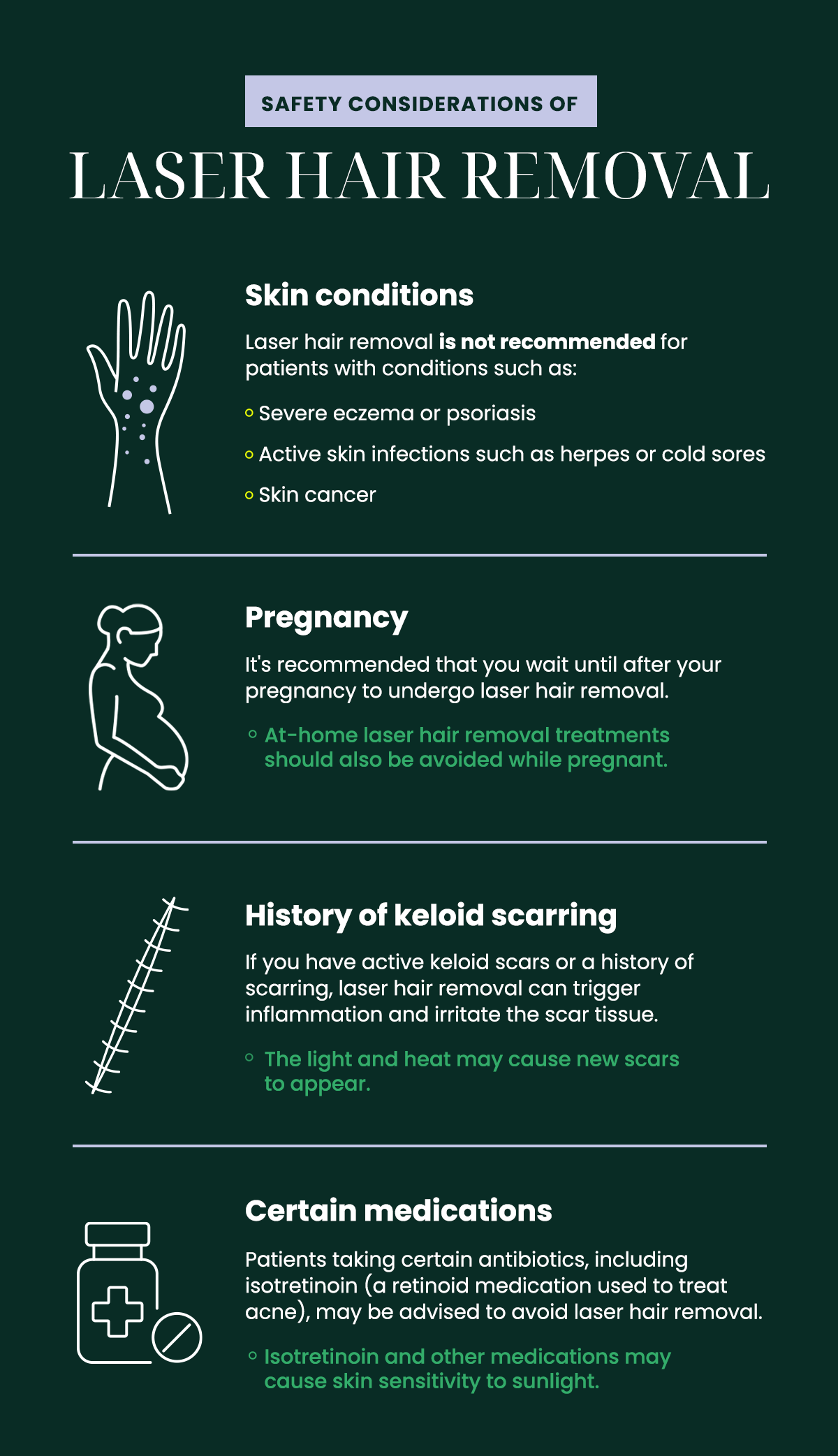
Safety Considerations of Laser Hair Removal
Laser hair removal results can be life-changing. However, following safety precautions is vital to avoid damaging side effects. Avoid the procedure in the following circumstances:
- Skin conditions: Laser hair removal is not recommended for patients with conditions such as severe eczema or psoriasis, active skin infections such as herpes or cold sores, and skin cancer. If you experience skin conditions, you may be prone to pigmentation changes and even burns.
- Pregnancy: It's recommended that you wait until after your pregnancy to undergo laser hair removal. At-home laser hair removal treatments should also be avoided while pregnant.
- History of keloid scarring: If you have active keloid scars or a history of scarring, laser hair removal can trigger inflammation and irritate the scar tissue. The light and heat may cause new scars to appear.
- Certain medications: Patients taking certain antibiotics, including isotretinoin (a retinoid medication used to treat acne), may be advised to avoid laser hair removal. Isotretinoin and other medications may cause skin sensitivity to sunlight.
Laser Hair Removal Effectiveness by Skin Type
Based on the Fitzpatrick scale, the effectiveness of laser hair removal varies by skin type. Below are the essential factors to consider before booking your first treatment:
Fair Skin Laser Hair Removal
For individuals with lighter skin types — Type 1-3 on the Fitzpatrick scale — laser hair removal is typically effective. The practitioner will likely use shorter-wavelength lasers to achieve greater focus on the hair follicle, given the contrast between dark hair and lighter skin.
There's a reduced risk of unwanted absorption because the epidermis has low melanin content. Potential side effects, including redness and slight irritation, are also mild and tend to resolve quickly.
Fair-skinned patients typically have low skin pigmentation, indicating a lower risk of skin pigmentation problems. However, it's still advisable to follow aftercare instructions and avoid direct sunlight.
Medium and Olive Skin Laser Hair Removal
Patients with skin types between 3 and 4 can achieve optimal results from the procedure. The practitioner will adjust the laser settings using technology such as a 755-nanometer diode laser. These lasers further penetrate the skin and limit the possibility of damage to the treatment area.
For medium and olive skin tones, the results are still positive. However, you may require additional treatments as your melanin levels are marginally higher than those of fairer-skinned patients. Your practitioner should avoid using strong and aggressive lasers, as they may cause hyperpigmentation.
Additionally, there's a risk that the treatment area may appear lighter or darker if you do not follow the aftercare instructions.
Dark Skin Laser Hair Removal
The relationship between dark skin and laser hair removal can prove more complex. Darker skin contains higher melanin levels. Patients with dark skin may be at a higher risk of developing pigmentation changes or burns.
Practitioners may choose to use an Nd:YAG laser for its deep penetration and longer wavelength. A stronger laser enables the technology to target the pigment on your skin’s surface. Overall, results can still be successful. However, they may take more time to appear than in other skin types.
Sensitive Skin Laser Hair Removal
Regardless of skin tone, your practitioner will take extra care during the procedure if you have sensitive skin and are prone to irritation. Before proceeding, your practitioner should offer patch tests to assess how well your skin responds to the laser.
Alongside using longer pulse durations and conservative settings, cooling technology is also beneficial for patients with sensitive skin. Through methods such as cooling gel or cooling air systems, there is limited risk of side effects, including irritation, swelling and heat sensation.
A combination of proper procedure techniques and quality aftercare helps reduce the likelihood of side effects.
What to Expect During Laser Hair Removal
The laser hair removal procedure requires various stages:
- Before starting the procedure, your practitioner provides a topical anesthetic cream for the treatment area. The cream is especially beneficial for sensitive areas, such as your underarms or bikini line.
- Your practitioner instructs you to wear eye protection throughout the procedure.
- The practitioner sets up the equipment and laser technology based on the treatment area.
- You may experience slight discomfort from the light pulses during the procedure. The sensation is similar to a rubber band springing on your skin.
- The first treatment is likely to be the most sensitive of the 8-10 recommended treatments.
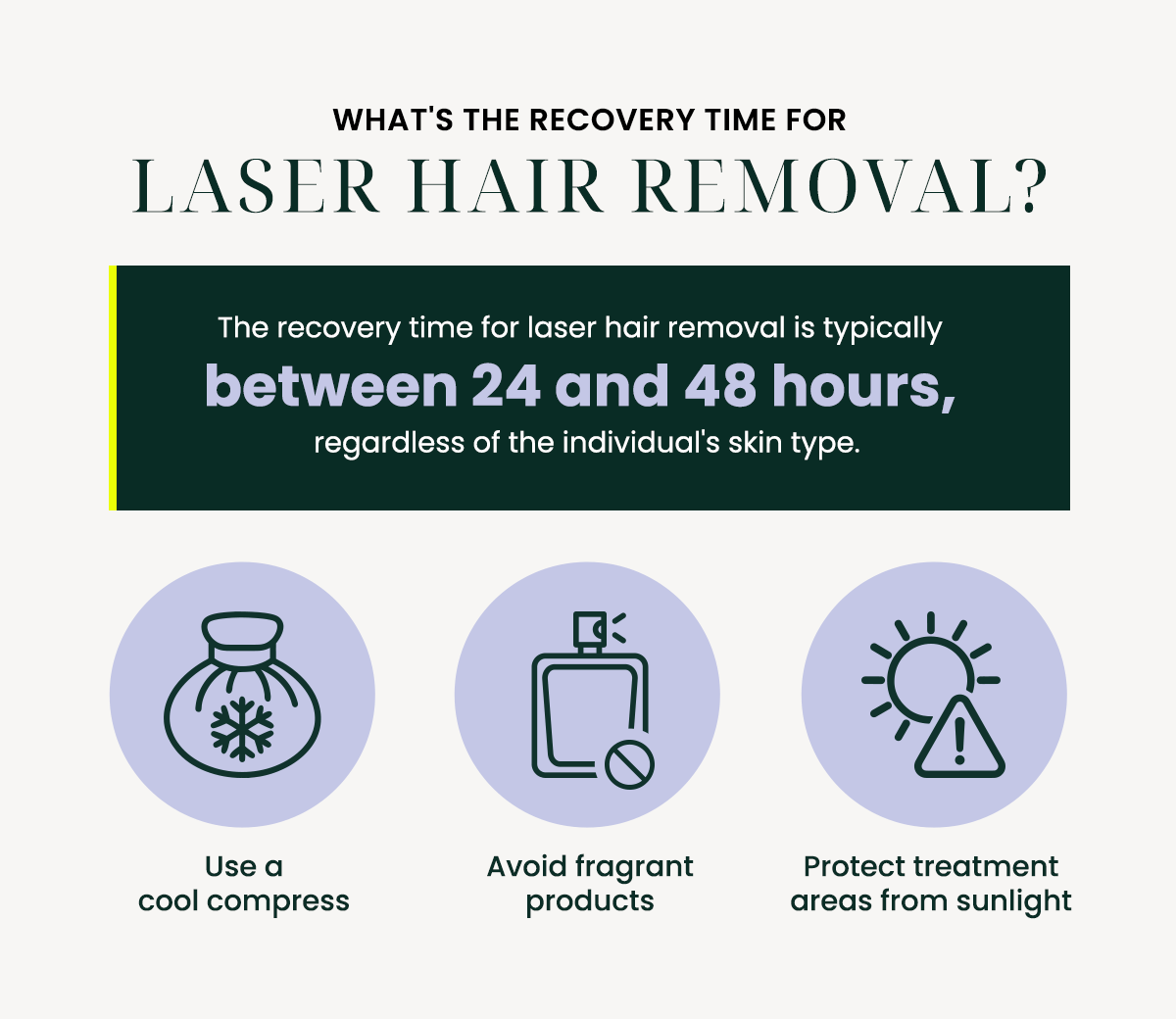
What's the Recovery Time for Laser Hair Removal?
The recovery time for laser hair removal is typically between 24 and 48 hours, regardless of the individual's skin type. The side effects are minimal, including a warm sensation that usually dissipates within a few hours. Despite the general recovery time, there may be some additional aftercare instructions:
- Use a cool compress: Applying a cool compress, such as an ice pack or a cold washcloth, can help cool down the treatment areas and minimize mild swelling.
- Avoid fragrant products: Using skin moisturizers and other fragrant products may irritate your skin and increase the risk of redness.
- Protect treatment areas from sunlight: Tanning after treatment can potentially cause hypopigmentation, as your skin becomes particularly sensitive.
How Permanent Is Laser Hair Removal?
Many assume that laser hair removal is a permanent solution. However, despite the growing technology, the procedure only reduces hair growth for a limited time and results may vary. When you choose an experienced practitioner who follows correct practices, you'll likely see optimal results.
Regarding the level of permanency across skin types, there is little evidence to suggest significant differences. The interval between treatments will vary depending on the treatment area. For example, with areas such as your back, the duration may be between 12 and 16 weeks. With the upper lip, treatments may be every four to eight weeks.
For a solution with more permanent results, electrolysis is the only FDA-approved treatment available.
Electrolysis vs. Laser Hair Removal
Although electrolysis and laser hair removal have the same purpose, there are key differences between them:
- Electrolysis: Using an epilator device and short radio frequency waves, electrolysis aims to prevent new hair growth and destroy the hair follicles. The procedure causes existing hairs to fall out and is suitable for all parts of the body. Electrolysis is more permanent than laser hair removal, but the procedure tends to be more time-consuming and causes more discomfort.
- Laser hair removal: This procedure also damages hair follicles by using high-heat lasers to slow hair growth. Like electrolysis, laser hair removal usually requires multiple treatments to achieve and maintain your results. However, electrolysis generally requires more sessions because it treats individual hairs one by one, while laser hair removal targets multiple hairs at once. While electrolysis is ideal for light hair, laser hair removal typically works best for dark hair.
In a nutshell, laser hair removal is faster and covers larger areas. Electrolysis is slower and more meticulous to target smaller areas, and is considered the only truly permanent method.
Other Factors Influencing Laser Hair Removal Effectiveness
The effectiveness of laser hair removal treatments differs from person to person. From a lack of preparation to underlying conditions, the results of laser hair removal depend on several factors.
Hormonal Imbalances
Especially if you are a female experiencing unwanted hair growth, you may have a hormonal imbalance, which can affect the hair growth cycle. A few common conditions can affect hormonal balance:
- Cushing’s disease: Also known as Cushing’s syndrome, Cushing’s disease may lead to hirsutism — excessive hair growth — due to the activation of androgen receptors and elevated cortisol levels.
- Polycystic ovary syndrome (PCOS): A relatively common condition in women, PCOS may also cause hirsutism due to a rise in testosterone levels.
- Congenital adrenal hyperplasia: Adrenal glands that produce increased levels of male hormones can lead to congenital adrenal hyperplasia, resulting in excessive hair growth.
Your Hair Growth Cycle
The three hair growth cycle phases — anagen for active growth, catagen for transitional growth and telogen for resting — contribute to laser hair removal results. Effectiveness is only present for the first anagen phase because the hair follicle has a connection to your blood supply.
Hair growth in the other phases is not suitable for treatment. Due to their unresponsiveness, you may require multiple treatments.
Lack of Preparation
Inadequate preparation for laser hair removal treatments significantly affects the results. A few key practices to avoid before treatment are:
- Tanning: It is advisable to stay out of the sun for a minimum of four to six weeks. Staying in the shade allows your skin to return to its natural pigment and helps the laser perform with better precision.
- Shaving: Thoroughly shave the treatment area at least a day or two before your appointment. This ensures the laser can properly penetrate the hair follicles.
- Waxing and plucking: Avoid waxing or plucking the area for at least six weeks before treatment. Waxing or plucking hair follicles can affect the laser's target performance.
Practitioner Knowledge
Density, growth cycles and hair thickness differ depending on the treatment area. Your practitioner must possess the necessary knowledge and experience to adjust the treatment settings, including beam size and wavelength, as needed.
To achieve lasting results, do your homework and book treatments with a qualified and experienced practitioner. Treatments from an unlicensed practitioner can lead to serious consequences, such as burns and scarring.
Medicines Promoting Hair Growth
Some medications can counteract the effects of the laser hair removal procedure by promoting hair growth. For example, hair loss treatments such as minoxidil may stimulate hair growth in areas beyond the scalp. Anabolic steroids, corticosteroids and birth control containing drospirenone are other medications that affect laser hair removal results.
Laser Hair Removal for Effective Results
Laser hair removal is a proven method for reducing hair growth. The key to achieving decent results is to approach a practitioner with relevant experience and the best technology suitable for your skin.
By following pretreatment and aftercare instructions, you can achieve results with minimal side effects and discomfort.
Related Posts