Reviewed By: Cara Dove, RN - VP of Nursing
When exploring options for hair removal, you'll likely have to decide between traditional waxing or embracing newer innovative methods, such as laser hair removal. But is one option more cost-effective than the other? The answer may be more nuanced than you think.
This guide by SkinSpirit covers everything you need to know about the differences in cost and how to determine true long-term value. After reading these comprehensive breakdowns of wax and laser hair removal costs, and what external factors contribute to value for money, you'll be able to make the right choice for your cosmetic needs. Ultimately, you can confidently invest in what matters most — your well-being and overall sense of self.
Key Takeaways
- The initial cost of waxing is generally lower than that of laser hair removal, but the need for regular appointments to maintain results every four to six weeks can quickly add up.
- The first appointments for laser hair removal will typically be more expensive, but this procedure only requires a few appointments per year to maintain results.
- In the long term, laser hair removal is generally more cost-effective than waxing when estimated over a five-year period.
- Laser hair removal costs will vary depending on the area being treated, including its size and sensitivity.
- Time, convenience and comfort levels are all indirect factors that should be considered in a cost comparison.
- Waxing can potentially lead to folliculitis, which can be treated through laser hair removal.
- Choosing the right clinic should include research on customer reviews, equipment quality and the experience of staff.
- A professional consultation is essential, and you should feel confident about asking questions and ensuring you're getting the right treatment.
Understanding Each Method
Knowing what to expect and what the process involves can reduce any concerns you may have. It can also play an important role in determining which options work best for your budget and other considerations.
How Professional Waxing Works
Professional waxing is a hair removal process with several steps. It involves applying a specifically formulated wax to your hair and skin. The wax then sticks to the hair, which is removed by quickly pulling it out from the root. The procedure also exfoliates the skin by removing dead cells, leading to a smoother appearance.
After removal, the affected area will typically be treated with a soothing lotion because the skin is red and sore. Waxing can be done on several areas of your body, such as:
- Eyebrow, chin and upper lip areas of the face.
- Feet, toes, fingers and hands.
- Stomach, chest, shoulders and back.
- Shins, thighs or entire areas of the leg.
- Arms, forearms and armpits.
- Intimate areas, including Brazilian waxes.
While waxing can make your skin feel soft and refreshed, it's a temporary solution that requires regular appointments to maintain results.
How Laser Hair Removal Works
Laser hair removal is a procedure that removes unwanted body hair. It's a process commonly used on several areas of the body, including underarms, legs, face and intimate areas where pubic hair grows. Laser hair removal uses medical-grade lasers to emit concentrated light that transforms into heat.
This heat is applied to hair follicles and impairs their ability to grow back. Using this method creates a semipermanent reduction in hair growth after multiple sessions.
A Comprehensive Cost Comparison
Weighing up the cost of each treatment is an important part of informing your choice. However, it's also a good idea to consider the difference between immediate and long-term costs. There are also several factors that may impact your decision regarding those costs.
Let's explore some ballpark cost comparisons and long-term reasoning behind making a decision.

Comparing the Initial Costs
When it comes to up-front spending for a waxing or laser hair removal appointment, specific costs will vary depending on the type of treatment center or spa you choose. However, we can create a realistic price example to help establish some initial cost expectations.
Let's say the initial hair-waxing cost for a bikini wax is $85, including tip. Compared to a general one-off laser hair removal cost of $200, the ballpark comparison shows short-term savings for people who choose wax removal. But the cost comparison doesn't end there.
Considering the Annual Costs
There are a few more calculations to make before determining the overall value. While waxing costs less per session, it typically requires a new appointment every four to six weeks. Over the course of a year, this could mean an average of 10 appointments. To maintain smoothness, we now have a general annual cost calculation of 85 x 10, totaling $850.
Laser hair removal's higher initial cost will include a similar appointment schedule at first. However, after the first six to eight sessions, you'll only need to maintain your appointments one to two times a year, which can reduce long-term costs.
What Are the Long-Term Costs of Laser Hair Removal vs. Waxing?
If the annual cost of waxing is $850, the long-term cost over five years would be $4,250. The annual cost of laser hair removal is generally higher — however, at an estimated $1,200 (for six initial sessions at $200) for the first year, it decreases significantly in the second year.
Having just a few annual laser hair removal appointments after year one means spending an estimated $400 per year on touch-up sessions. This gives us a long-term cost of $2,800 ($1,200 for year one and $1,600 for the next four years).
The results give us a total of $4,250 for wax removal and $2,800 for laser hair removal over five years.
Does the Cost of Laser Hair Removal Vary by Body Area?
Yes. It's one of the main reasons why cost comparisons should be stated as general estimates. With so many different clinics, treatments and areas of the body to consider, prices can vary significantly. Many factors go into determining a final cost, including:
- The area being treated: Smaller areas can be treated safely, promptly and with precision. But larger areas of the body, like the entire back or legs, may need more time, increasing the cost of the session.
- The sensitivity of the area: You may be looking to remove hair in sensitive areas of the body. This can slow the process or require more appointments due to the skin's sensitivity.
- The type of hair being treated: Everyone's hair varies in thickness, color and density, which impacts how it will be treated. Your hair type will also vary depending on where it's grown on your body.
- The practitioner's opinion: Your treatments may be spaced further apart if your practitioner feels it's the best choice. Their expertise will be an important part of ensuring you achieve the desired goals.
Laser hair removal isn't a black-and-white process. Each area of your body is different, and achieving a significant reduction in hair growth requires care and attention. A one-size-fits-all approach won't cut it.
Critical Factors Related to Cost
There are other things to consider when comparing the long-term costs of laser hair removal and waxing. While they're not strictly limited to how much you'll spend, these are often overlooked factors when comparing prices.
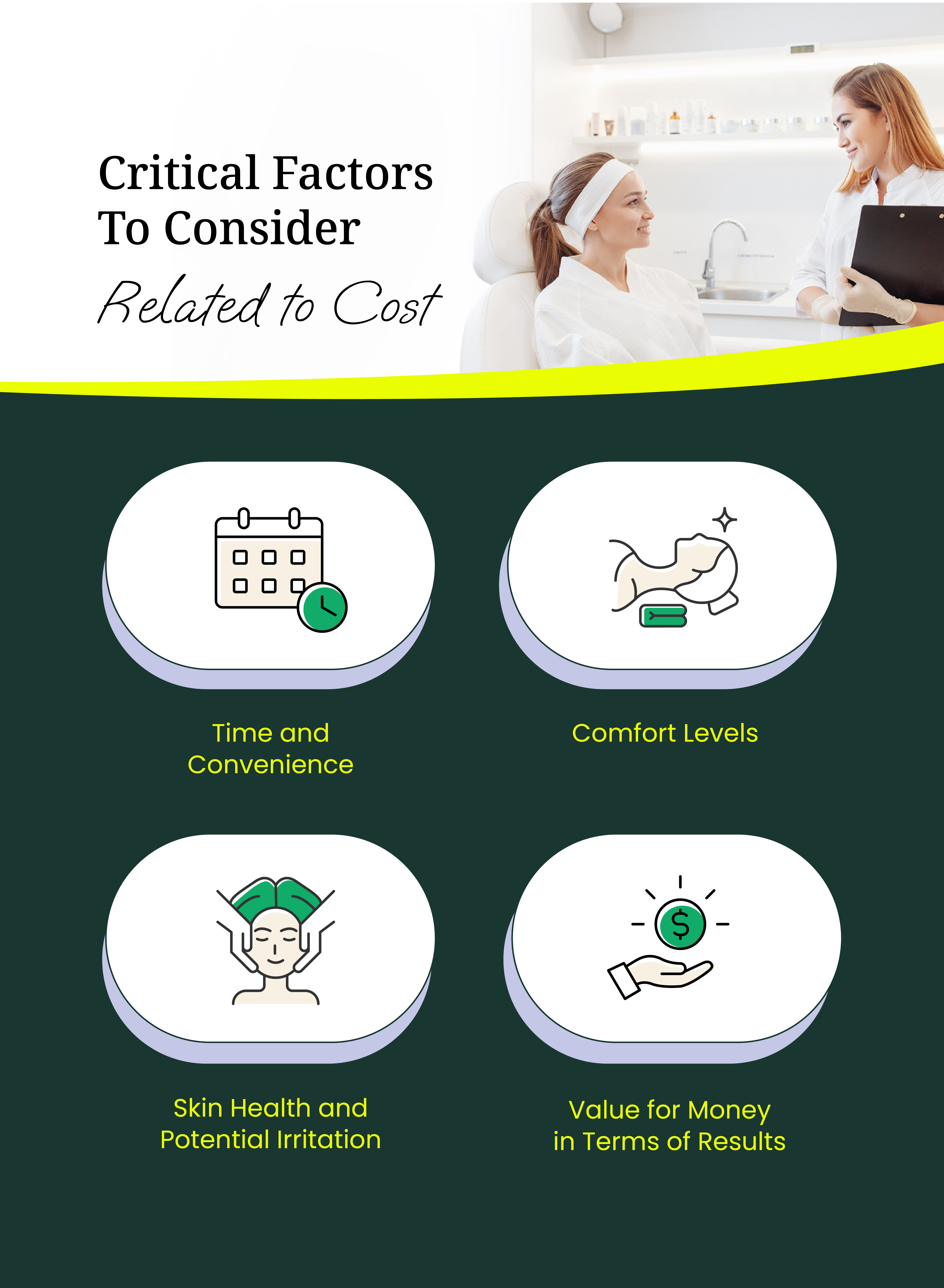
Time and Convenience
Monthly waxing appointments will require booking, parking and putting aside time to get them done. This additional time and travel costs can add up considerably. Laser hair removal treatments are typically frequent at first, then maintained with semiannual appointments.
These differences can be crucial for busy professionals or people with hectic social calendars.
Comfort Levels
Your comfort should always be a priority. Waxing involves a sharp, tugging sensation, which is caused by the hair being quickly pulled out at the root. Laser hair removal isn't often described as painful. It usually only causes mild to moderate discomfort — closer to the sensation of a rubber band hitting your skin.
Advancements in cooling technology and numbing creams also help minimize discomfort during laser hair removal treatment.
Skin Health and Potential Irritation
Skin health is a personal matter that depends on your individual sensitivities. Waxing is a common cause of folliculitis, an ingrown hair condition caused by damage to hair follicles. Symptoms include tender, red and itchy spots on the face, pus-filled bumps or acne.
Laser hair removal is a recognized treatment for this condition for people who experience symptoms. This means people who choose waxing may end up spending extra on laser hair removal to fix the issue.
Value for Money in Terms of Results
True value is often determined by the effectiveness of your hair removal choice. Waxing offers a temporary fix, with hair typically growing back in two to four weeks. The U.S. Food and Drug Administration (FDA) lists laser hair treatment as a permanent hair reduction solution, based on results measured after treatment completion.
While this definition is based on significant hair reduction and not complete elimination, it's still an important contributor to choosing the best value.
Considerations Before Seeking Treatment
Making the right choice for your cosmetic goals should always involve professional advice. No matter which option you choose, it's crucial to ensure that you're visiting a reputable, safe specialist for your consultations.
Consider the following factors before you decide where you get your treatment:
- Equipment quality: Look into the kind of equipment the clinic uses. Do a quick visual check, in person or online, for overall cleanliness. Don't be afraid to openly ask about specialized equipment, including the reason why it's being used for your specific skin and hair tones.
- Customer reviews: Any clinic can claim to be reputable and customer-focused. Check websites for positive reviews, happy clients and updates on treatment outcomes. Value for money will usually be something clients comment on immediately, giving you extra peace of mind.
- Qualifications and experience: Verify that the practitioners performing the treatments are certified, highly trained and experienced. Search online for options, focusing on the “about us” sections where clinical experience and expertise are commonly demonstrated.
While many of these considerations are geared toward laser hair removal, they're best practice for any potential hair removal appointment.
How Skin Tone and Hair Color Influence Effectiveness
Skin tone and hair color may help determine your treatment type, as the lasers used for hair removal target pigment. In the past, effective hair removal was typically associated with lighter skin tones and dark hair. However, innovations have ensured safe and effective results for darker skin tones, too.
Many modern clinical experts have debunked the myth that laser hair removal is ineffective for darker skin tones. Successful treatment requires using a laser specifically suited to each person's skin tone.
The Importance of a Professional Consultation
Before you undergo laser hair removal, getting a consultation from a qualified medical professional is essential. They can help you determine the best type of laser treatment based on your skin type, hair type and other important criteria.
A good professional consultation experience will typically include:
- A comprehensive review of your full medical history.
- A run-through of any current medications you're taking.
- Some simple explanations about the hair removal process.
- Tips and insights on aftercare for your specific skin type.
- Clear and realistic timelines for the expected results.
- An open discussion about any potential side effects.
Finally, a professional consultation should feel like a pressure-free talk. You should be able to vocalize your concerns and get any questions answered clearly.
Making the Right Hair Removal Choice for Your Goals
Cost and value can extend beyond the amount listed on your bill. Taking the time to understand the long-term costs of waxing or laser hair removal treatment is important. Additionally, by considering other external factors that contribute to your cosmetic appointments, you can make the best choice for your needs.
Taking all of the factors mentioned in this guide into account can ensure you feel seen, heard and understood. This careful thought process will give you the confidence to make informed choices that prioritize safety, peace of mind and value.
Related Posts